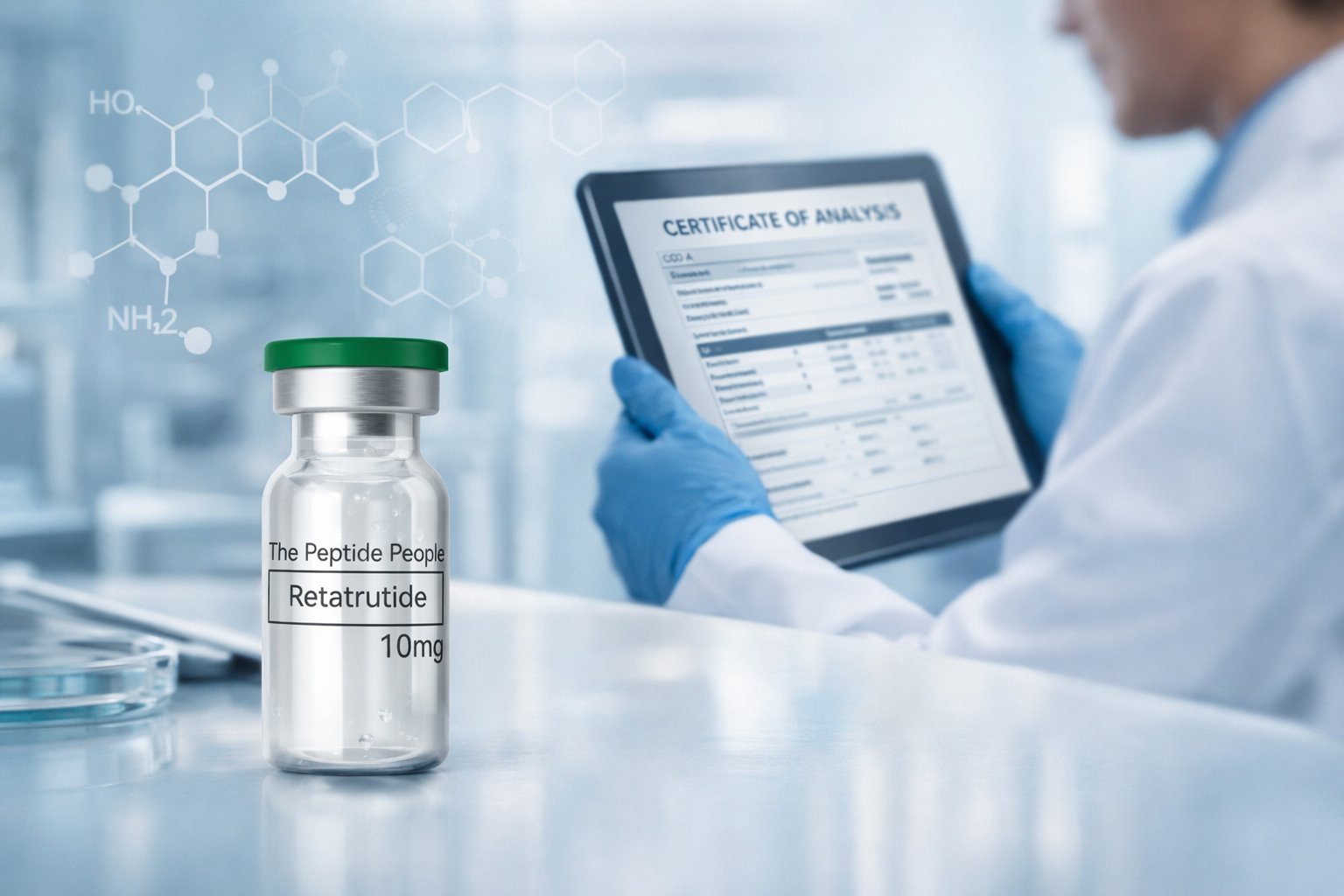
Peptides are highly sensitive compounds, and their quality, purity, and identity directly impact research integrity and safety. Because many peptides are produced and distributed globally, independent third-party testing is essential to verify that a product contains exactly what it claims — and nothing it shouldn’t.
A Certificate of Analysis (COA) is a document issued by an accredited laboratory that confirms a peptide has undergone rigorous analytical testing. COAs provide transparency, accountability, and confidence in product quality.
Comprehensive peptide testing typically includes:
- Identity verification to confirm the peptide’s molecular structure
- Purity analysis to detect contaminants, impurities, or degradation products
- Content and concentration testing to verify accurate labeling
- Endotoxin testing to screen for bacterial toxins
- Stability and integrity assessments to ensure proper formulation and handling
By supplying current COAs from independent laboratories, peptide providers demonstrate a commitment to quality control, consistency, and scientific integrity. This process helps ensure that every batch meets defined specifications and supports reliable, reproducible research outcomes.
- Purity and accuracy
- Chromatography
- Mass Spectrometry
Don’t be afraid to ask for a copy of Certificate of Analysis (COA)!
